
Concrete Cutting in Glendale AZ
Concrete cutting that is straight, planned and scanned first, so the work that follows goes in easier and nothing hidden gets hit.
Concrete cutting, in short answers
- Is it loud?
- For the few minutes the blade runs, yes. We warn neighbors when we can and work at reasonable hours.
- Is it dusty?
- We cut with water where we can, which keeps dust down. Dry cutting is used only when water would cause damage.
- How deep can you cut?
- We match the depth to the job. A control joint is about a quarter of the slab thickness. A full depth cut goes all the way through.
- Do you scan first?
- Yes. In Arizona many house slabs are post tensioned, so we scan before we cut.
The cut comes first, and the cut matters most
A bad cut shows up everywhere else. The edge breaks. The patch will not line up. The new slab will not meet the old. Concrete cutting is the quiet step at the start of a job, and it decides how good the finish looks at the end.
We cut concrete in Glendale, AZ for plumbers who need a trench through a garage floor, for homeowners who want a door where a window was, for builders who need a clean edge before new work and for anyone who needs a section removed without breaking the rest.
What our concrete cutting covers
Trenches and openings
Slots for drain lines, water lines and conduit through slabs and garage floors.
Doorways and windows
Straight openings in block and poured walls.
Control joints
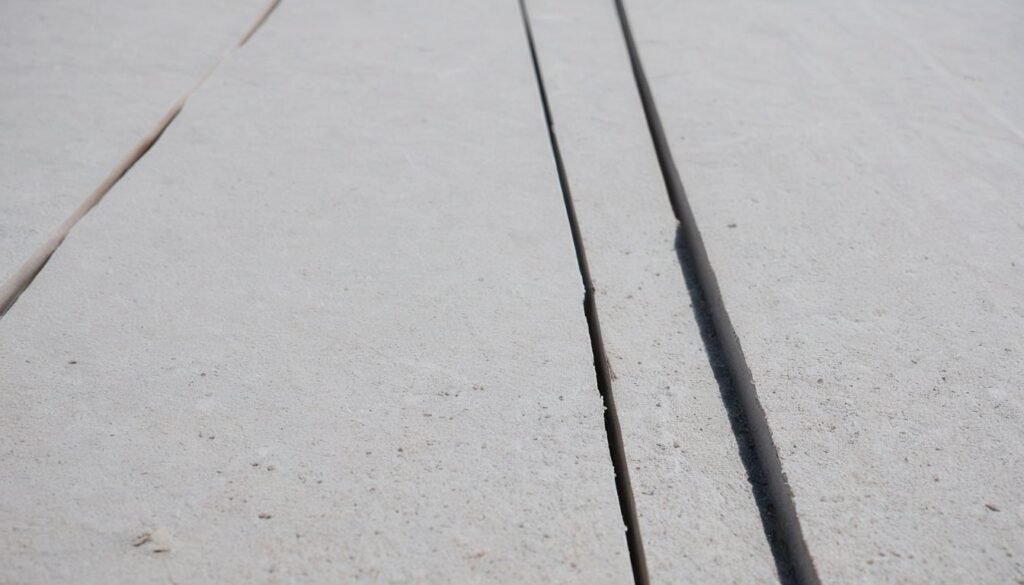
Saw cuts that tell new concrete where to crack.
Sections for removal
Clean lines around a driveway panel, a step or a patio slab.
Expansion gaps
Cuts that let slabs move without pushing on a wall.
Cuts for later repair
Neat edges that make patches look planned.
Planning concrete cutting before the blade touches
We mark every cut with chalk or paint and walk it with you. We also check for what is underneath, like post tension cables in house slabs, pipes, wiring and radiant systems. A cut in the wrong place can hit something expensive or dangerous.
If there is any doubt, we ask for plans or use a scanner. Arizona 811 can mark public utilities, though not private lines, so we also ask about the ones on your property. Our concrete repairs and demolition pages explain what usually follows the cut.
Concrete cutting questions we are asked
Can concrete cutting be done in a post tensioned slab, and how do you stay safe?
Concrete cutting in a post tensioned slab is possible, but only with a plan. Many homes in Arizona are built on slabs that contain steel cables inside plastic sleeves. After the concrete gained strength, those cables were pulled very tight and anchored at the edges. They hold the slab in compression, and they carry enormous force. If a cable is cut, it can snap and release that force, causing serious injury and damage.
So we do not cut into a house slab blindly. We ask first whether the slab is post tensioned. Then we scan it with ground penetrating radar, or we check the original plans, to locate the cables. Once we know where they are, we mark them and plan cuts that stay away from them, or we work with an engineer if a cut near a cable is unavoidable.
It is a good rule for homeowners too. Never core, drill or saw into a house slab without scanning.
For detached slabs, such as a patio or a shed pad, post tensioning is rare, but we still scan for pipes and wires. Bring any plans or notes from when the house was built.
Why do new slabs need joints cut within hours in summer?
Because concrete begins to shrink almost immediately, and in the heat it happens faster. A fresh slab that has not been given a place to crack will crack by itself, often within the first day. Control joints give the shrinking concrete a weak line to follow, so the crack hides in the groove instead of running across the middle of the patio.
In mild weather, we can wait until the next morning to saw the joints. In a Glendale summer, the window is shorter. The concrete sets sooner and shrinks sooner, so we may need to cut within hours. If we wait too long, the slab cracks before the saw arrives.
Timing is also about the edge. Cutting too early, before the concrete has hardened enough, tears the edge and leaves a ragged line. Cutting too late wastes the benefit. We use early entry saws that cut a shallow groove soon after finishing, and conventional saws when the concrete is ready.
For concrete cutting on a new pour, the layout is planned in advance. We mark the lines on a sketch, so you can see where the joints will go.
Can you cut a doorway or window opening in a block wall?
Yes, but it takes planning, because the wall may be holding up something above. Many homes in the Valley are built with concrete block walls covered in stucco. Those walls often carry the weight of the roof, so an opening without a proper header or lintel is dangerous.
Our role is the cutting. We make clean, square openings with a wall saw or a core drill, and we can cut for new doors, windows, vents and utility passes. The structural part belongs to an engineer, an architect or a builder, who will tell us the size of the opening and what support is needed.
Please bring the plans or the engineer's sketch before we start. We also need to know about pipes, wires and ducts within the wall. Mark them if you know where they are, and we will check with a scanner.
For poured walls, cutting is cleaner, because the wall is solid. For block, we have to be careful about cores and fill. After the opening is cut, a mason or a framer finishes the job, and we coordinate with them so the schedule works. Concrete cutting for openings is a team effort.
How do you manage dust and slurry when cutting concrete?
We cut wet when we can. Water on the blade cools it and traps dust as slurry, a thin gray paste that we vacuum and collect before it dries or runs into a drain. Slurry is harsh and should never go into a storm drain, a yard or a wash, so we capture it and haul it away.
Dust is a big concern around the Valley. Concrete dust contains fine silica, which is a health hazard, and blowing dust is a regulated problem in Maricopa County. Wet cutting, vacuum shrouds and careful cleanup keep it under control.
For jobs inside a garage or a house, we use a shroud and vacuum on the saw, and we tape plastic sheeting to protect doors and furniture. We can also close off the work area so dust stays where it should.
Some cuts have to be dry, such as when water would damage wiring or a floor below. In those cases, we wear respirators, use vacuums and ask you to stay out of the area.
If you are sensitive to dust or have a family member with breathing problems, tell us before we schedule the concrete cutting.
Can you cut a trench through a garage floor for new plumbing or an ADU?
Yes, and we do it often. A bathroom addition, a laundry room, a casita or an accessory dwelling unit often needs new drain and water lines, and that means opening the slab. A clean trench cut makes the job easier for the plumber and the repair afterward look neat.
We start by marking the trench with the plumber. We check for existing pipes and, if the slab is post tensioned, we scan for cables. Then we saw cut the edges to the right depth, so the concrete breaks along straight lines. We remove the slab between the cuts, and the plumber works in the trench.
After the pipes are in and tested, the trench needs to be backfilled with compacted material and refilled with new concrete. We can do that as well. We tie the new concrete to the old with dowels, so the two sections stay level.
If the trench is in a house slab and the plans are not clear, we may recommend an engineer's review before cutting.
Bring us your plumber's plan, and we will work out the cuts together.
How deep do you cut, and what happens when you hit rebar?
Concrete cutting depth depends on the job. We match the depth to the job. A control joint is usually about a quarter of the slab thickness, enough to create a weak line without cutting through. A full depth cut, used to remove a section or open a trench, goes all the way through the slab.
If we hit rebar, it is usually not a problem. A diamond blade cuts through steel. It slows the cut and wears the blade faster, so we plan extra time for heavily reinforced slabs. What matters is what the steel is doing. In a structural slab, cutting through steel can change how the slab carries weight. Near an edge or a support, we ask an engineer first.
We also look for other things in the concrete. Pipes, conduit, radiant lines and post tension cables are all possible, which is why we scan before we cut.
If we find unexpected steel, we stop, mark it and talk about the plan with you. Good concrete cutting is not about speed. It is about knowing what is inside the slab before the blade enters.