
Concrete Leveling in Glendale AZ
Concrete leveling raises sunken slabs back to where they belong, so water drains away from the house and nobody trips.
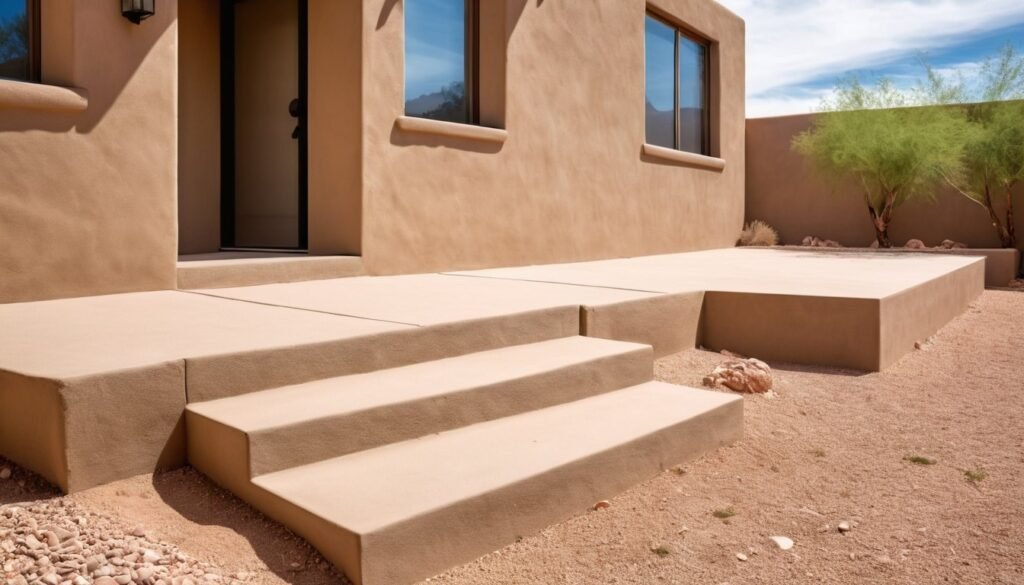
The slab did not break. It just went down.
That is the first thing we notice on most concrete leveling calls. The concrete is solid, but one side has dropped an inch or two, and there is a lip you can trip on. The walkway by the garage tilts toward the house. The patio has a low corner that never drains.
Concrete leveling is for slabs like that. Instead of breaking out the concrete and pouring new, we raise the old slab back to level. In Glendale, AZ, where monsoon runoff and leaking sprinklers wash soil out from under walks and drives, it is often the quickest and cheapest way to fix a sunken slab.
How concrete leveling works
We find the void
We measure how far the slab has dropped and tap the surface to find where the soil has washed away.
Small holes go in
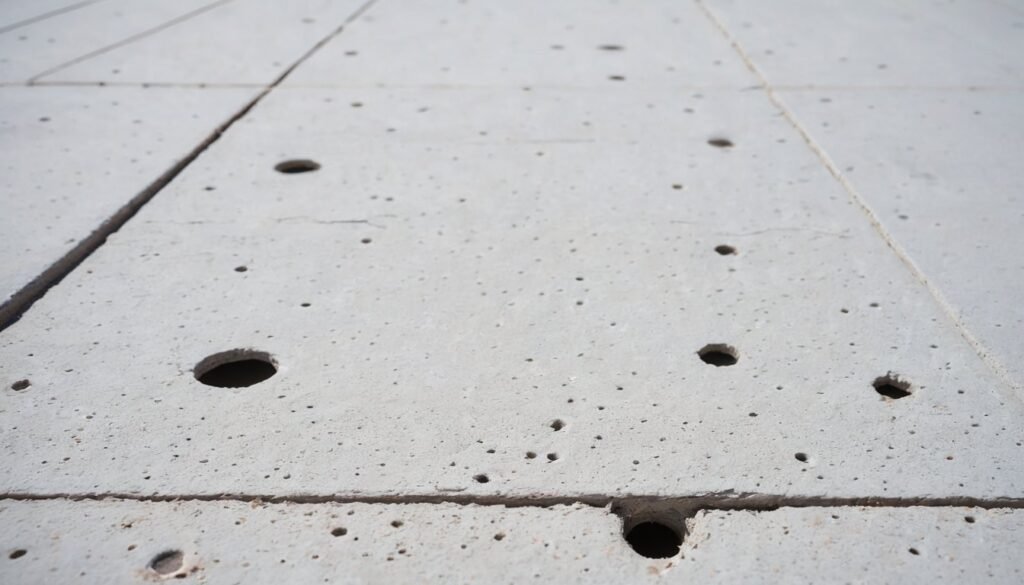
We drill small holes, about the size of a quarter or a little larger, in a pattern across the slab.
The slab is lifted
Through those holes we pump a stabilizing material under the slab. It fills voids and lifts the concrete gradually while we watch the level.
Holes are filled and cleaned
Once the slab sits level, we patch the holes and clean the surface.
Water is fixed
If water caused the drop, we fix the sprinkler, the downspout or the grade so it does not happen again.
Lifting or replacing? How we decide
Lifting makes sense when
The concrete is mostly in one piece, the surface is in decent shape and the problem is a void or a soft spot we can fill.
Replacing makes sense when
The slab is crumbling, broken into many pieces, too thin or sitting on a base that keeps failing. See concrete repairs and demolition.
What a leveled slab looks like
When concrete leveling is done right, you see a flat surface, a tight joint between slabs and a row of small patched holes that fade with time. The slab drains toward the street or the yard, not toward the house. You can run a hand along the joint without catching it.
We check the result with a level and a straight edge, and we walk the area with you before we leave.
Concrete leveling questions from Glendale homeowners
Why did my slab sink after the monsoon, and could it happen again?
Concrete does not sink on its own. It drops when the ground beneath it gives way, and in the Valley there are a few common reasons. The first is water. Monsoon storms can drop an inch of rain in an hour, and water running along the edge of a slab or through a crack carries fine soil away. Over a season or two, a void forms, and the slab settles into it. A downspout that empties next to a slab, a broken sprinkler line or a leaking pool pipe does the same thing more slowly.
The second reason is a poorly compacted base. If the slab was poured on loose fill, which is common around newer construction, the fill compacts under the weight and the concrete settles with it. The third is soil that swells when wet and shrinks when dry, which affects some parts of the Valley.
So good concrete leveling has two steps. We lift the slab, and we fix whatever took the soil away. If you skip the second step, you will be calling us again in a few years, and we would rather you did not need to.
How is concrete leveling done, and how long does it take?
We drill small holes through the slab, usually about the size of a quarter or slightly larger, in a pattern that depends on the size of the slab and how far it has sunk. Through those holes, we pump a stabilizing material beneath the concrete. It fills the voids and, as the pressure builds, gently lifts the slab. We watch with a level the whole time and stop when the slab matches its neighbors.
We then patch the holes with a material that blends with the concrete. We clean up and walk the area with you.
A typical walkway, patio or driveway section takes a few hours. A larger driveway or a pool deck may take most of a day. Because the slab is existing concrete and we only add a little material underneath, you do not wait for a full cure. You may be able to walk on it the same day and drive on it within a day or two. We give you a specific time at the end of the visit.
That quick turnaround is one reason people like concrete leveling. There are no forms, no new concrete to cure and no weeks of keeping cars off. If you have a deadline, tell us and we will plan around it.
Is concrete leveling a smarter move than pouring a whole new slab?
When the slab is in good shape, yes. It is usually quicker, less messy and less expensive, and you keep your existing concrete, landscaping and edges. There is no demolition, no dump trip and no waiting for new concrete to cure in the summer heat.
But it is not always the right answer. If the slab is badly cracked, crumbling or very thin, lifting it will only raise broken pieces. If the soil under it keeps washing out or the base is gone, a lift may give you a few good years, not decades. And if the slab was poured at the wrong height or slope from the day it was built, leveling may not fix that.
We look at the slab before we recommend anything. We check thickness, cracks and the surface, and we look for the cause of the drop. If concrete leveling will do the job, we say so. If a replacement is smarter, we say that. Our demolition page explains how we remove old slabs when it comes to that. You will get a straight answer and an estimate that lists both options.
Can a patio or pool deck next to the pool be lifted safely?
Yes, with extra care. Pool decks and patios near a pool often sink because water from the pool, from splash and from sprinklers keeps the soil wet and washes it away. They are common candidates for lifting, and a slab that tilts toward the house or toward the pool is a safety issue.
The difference is that a pool shell, its plumbing and the coping are nearby. We plan the lifting carefully. We choose where to drill, we control how much material goes in and we lift in small steps. We keep an eye on the pool edge and the plumbing, and we stop if anything looks wrong. If the deck is attached to the pool coping, we may need to isolate it first.
A leak is a special concern. If a pool line is leaking, lifting the slab will not fix the cause. We may suggest having a pool company test the plumbing first.
Bring photos of the deck, the cracks and the pool edge. For concrete leveling around water, we want to see the whole picture before we say yes.
Will a slab sink again after concrete leveling?
It can, but it does not have to. The key is the reason it sank. If a leaking pipe or a downspout washed out the soil, and you fix the leak and redirect the water, the slab will usually stay put. If the soil is loose fill that keeps compacting, the slab may settle again, though the material we pump under it adds support.
The stabilizing materials used for lifting are made to resist water and stay put. They fill the voids that were already there, so there is less room for the slab to drop. That is why a good lift often lasts many years.
We look for the root cause on every concrete leveling job. We check sprinklers, gutters, grade and any signs of leaks, and we tell you what to fix. Sometimes it is as simple as a longer downspout extension. Sometimes it means regrading a low spot or moving a sprinkler head. We write our recommendations on the estimate, and we note the job in our records, so if you call us later, we know what we did and what to look at next.
Does leveling work for garage floors and interior slabs?
Sometimes, and there are reasons to be cautious. Garage floors and carport slabs sink for the same reasons as driveways and walks, especially near doors and drains, and many can be lifted. A garage floor that tilts toward the house, or one that has settled away from a wall, is a good candidate if the concrete is in good condition.
The main caution is what lies in or under the slab. Many Arizona homes are built on post tensioned slabs, with tight steel cables inside the concrete. Drilling into one without knowing where the cables run can be dangerous. We never drill into a house slab without scanning first or confirming the plans. Plumbing under a slab is another concern, and we avoid pumping material where it could interfere.
For slabs that are part of the structure of the house, we usually recommend an engineer, because lifting a foundation is a structural decision. We do concrete leveling on walks, patios, drives and detached garage floors.
Tell us what you have and send a photo. We will tell you whether lifting makes sense.
A trip hazard is a lawsuit waiting to happen. A lifted slab is a short visit by comparison.