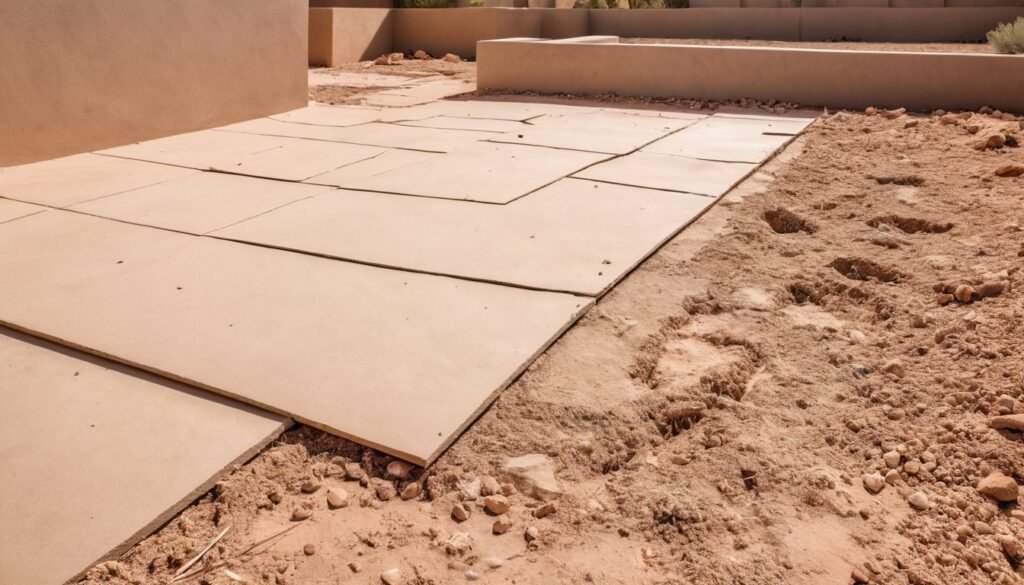
Demolition in Glendale AZ
Demolition that clears old, cracked and failed concrete safely, hauls it away and leaves the ground ready for what comes next.
How a concrete demolition day runs
Walk and mark
We walk the site with you, mark the limits and find utilities, irrigation lines and anything fragile.
Protect what stays
Plants, stucco, lights and neighboring concrete get covered or cut apart cleanly.
Break it out
The concrete is cut along edges, broken into pieces and lifted out.
Load and haul
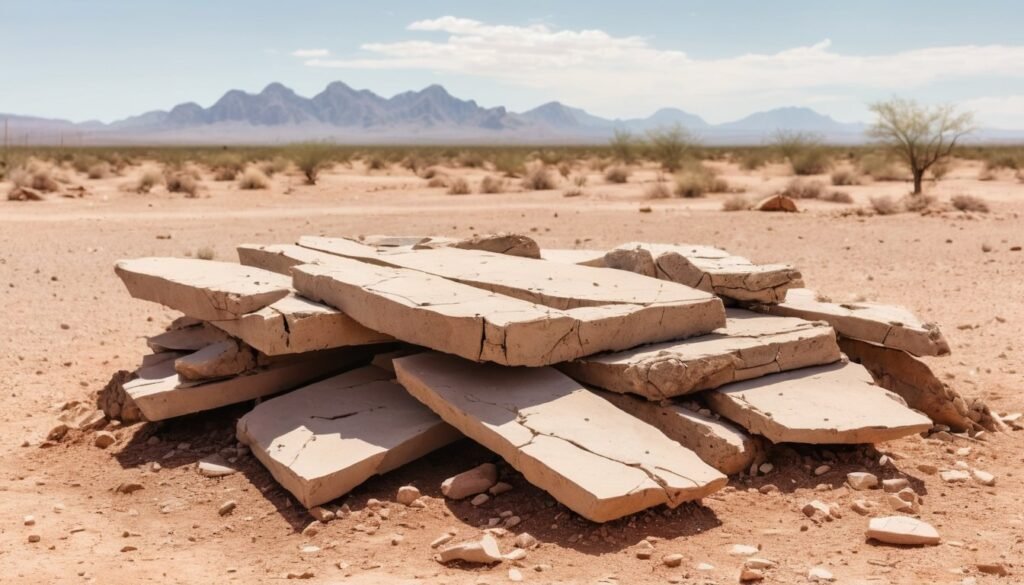
Pieces are loaded and taken to a recycling yard.
Check the ground
We look at the base. Soft spots, roots and trash are removed so the next pour starts right.
Why people call us for demolition instead of borrowing a jackhammer
Plenty of weekend warriors have started a demolition and quit halfway. Concrete is heavy. A four inch patio slab can weigh over a thousand pounds a section, with steel inside that fights back. It is also unpredictable. A slab can crack in a direction you did not plan.
Our demolition work in Glendale, AZ covers patios, driveways, steps, sidewalks, garage floors, shed pads and old footings. We do it with the right tools, the right plan and a crew that has done it before. And we aim to leave the yard in better shape than we found it.
What demolition covers
Patios and walks
Old, cracked or ugly slabs removed so a new one can go in.
Driveways
Full or partial removal, with clean saw lines against the street or the garage.
Steps and stoops
Carefully removed so the house wall and doorway stay intact.
Garage and shop floors
Sections or whole floors, including steel and old drains.
Footings and pads
Old foundations from sheds, carports and removed buildings.
Pool decks
Removed around the pool with care for coping and plumbing.
Call Arizona 811 first. A broken line costs more than the whole tear out.
Demolition questions from Glendale property owners
What does demolition include, and what affects the price?
Demolition covers cutting, breaking, loading and hauling the old concrete, and often preparing the ground afterward. The price depends on several things, and it helps to know them when you compare quotes.
Size and thickness come first. A thin, unreinforced patio is much quicker to remove than a thick driveway with rebar. Steel slows the work and wears equipment. Access is next. If a machine can reach the slab, the work is faster. If the slab is behind a block wall, through a narrow gate or beside a pool, it may need to be broken by hand or with smaller equipment.
Hauling and disposal are real costs, since concrete is heavy and recycling yards charge fees. Distance to the yard and the weight of the load matter. Other factors include trees, utilities, fragile neighbors and whether the ground below needs repairs.
We list demolition as its own line in the estimate, so you can see what you are paying for. If you plan a new slab, we offer a combined price. Most customers find that doing both with one crew saves time, since the same people who break the old slab also prepare the base for the new one. Send a photo and a rough size, and we will give you a starting range.
Do I need to call Arizona 811 before demolition day?
Yes, and so do we. Arizona 811 is the call before you dig service, once known as Blue Stake. You call or submit a request a couple of working days ahead, and the utility companies mark the location of their underground lines, such as gas, water, sewer, electric and communications. Hitting a line during demolition can be dangerous and expensive, and it is the law to request a locate before digging.
We request locates before work that involves digging or heavy breaking near the ground. We also ask you about private lines that the public service does not mark. Irrigation lines, landscape lighting wires, pool plumbing, gas lines to a grill or a fire pit and electrical lines to a ramada or a detached garage are not always on the public maps.
If you know where they are, mark them or tell us. If you are not sure, we can use a scanner or hand dig near suspected lines.
The locate takes a few days, so it is part of the schedule. Demolition in Glendale starts with a quick call, and that small step keeps the job safe for everyone.
Can you remove part of a patio or driveway and keep the rest?
Yes. We call it a partial removal, and it is common. We saw cut along a joint or a marked line, so the edge between the old and new concrete is clean. Then we break out only what needs to go.
The cut is the secret. If you break up concrete without cutting first, the crack can run into the part you want to keep. A saw cut stops it. We often tie the new concrete to the old with dowels, steel pins that keep the two sections level.
Sometimes we recommend removing a whole panel instead of a smaller piece, since the joint lines will look better. A cut in the middle of a panel will show the seam. A panel replaced from joint to joint looks planned.
There is a limit. If the remaining concrete is in poor shape, or if the cracks have spread, a partial demolition may only delay the bigger project. We will tell you what we see and what we recommend. For more on how we cut, read about concrete cutting.
Where does the broken concrete go once it leaves my yard?
Most of it is recycled. Concrete is one of the most recycled building materials. We take it to a yard where it is crushed into pieces of different sizes. The crushed concrete is used as base under roads, driveways and lots, or as fill, and the steel is pulled out and sold for scrap.
That is good for the environment and for you, because recycling is often cheaper than landfill. It also keeps heavy material out of local dumps.
If you want to keep some of the concrete, tell us. Larger pieces make good retaining wall blocks, stepping stones, edging for garden beds or fill for a low spot. Crushed concrete also makes a firm base for gravel paths and RV parking. We can stack pieces where you want them. Keep in mind that old concrete with rebar sticking out is a hazard, so we cut the steel off first.
We do not dump anything on your property that you do not ask for, and we do not take it to a wash or an empty lot. When the job is finished, we rake and sweep the area so you are not left with chunks and dust. Demolition should end with a clean yard.
Will demolition damage my block wall, pool plumbing or landscaping?
It should not, and a careful crew works to make sure it does not. The biggest risk is not the slab itself. It is vibration and flying pieces. A slab that touches a block wall, a step or a pool coping can transfer a shock if it is hit directly. We cut along those edges first, so the vibration stops at the line.
We use covers and shields for windows, stucco and vents. We fence off or wrap shrubs, cactus and trees. We watch for roots and irrigation lines. And we use the smallest machine that can do the job, which is also easier on your yard.
Pools need special care. Pool plumbing runs under decks and patios, often just below the surface. We locate it before breaking anything, and we use hand tools near it.
Some damage is hard to avoid. A heavy machine can leave ruts in soft ground or crush a few plants. We tell you in advance if we expect it, and we fix anything we damage ourselves. Take photos before we start, and we will compare them at the end. Demolition is a rough job, but there is no reason to be careless.
How long does demolition take, and do I need to be home?
Most residential demolition takes a day or less. A typical patio, walk or short driveway can be cut, broken out and hauled away in a few hours to a day, depending on size, thickness and access. A larger driveway, several slabs or thick concrete with a lot of steel may take two days.
You do not need to be home the whole time, but we ask you to be available at the start. We walk the site together, confirm the limits and talk about anything you want to keep, such as plants, pavers or a piece of concrete. We also need access to the work area and a place to put a bin or a truck. If you will be away, we can coordinate by phone and photos.
Heat shapes our schedule. In summer, we start early, because working on a slab at noon in 110 degrees is hard on the crew and the equipment. Early mornings are also quieter for neighbors.
We tell you when to expect us, give you a heads up if weather changes the plan and let you know when we are finished. After demolition, the area is ready for new concrete, pavers or landscaping.
What comes after the tear out
Most demolition ends with a clean, bare patch of ground. From there you can pour new concrete, lay pavers, plant a garden, spread gravel or leave it open. If a new slab is next, we can handle that too, with a fresh base and a proper slope.
Reuse is part of the plan. Some broken concrete is crushed and recycled. Some stays on site if you want fill for a low spot. Ask us before we haul.