
Concrete Patio Installation in Glendale AZ
Concrete patio installation designed around the sun: the right color, the right texture, enough shade and a slope that sends monsoon water away.
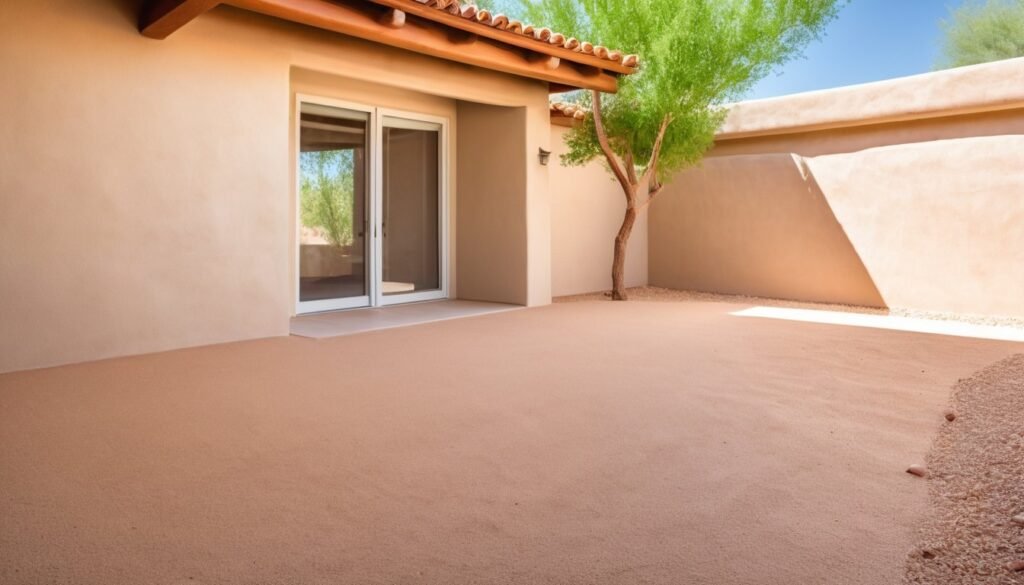
A desert patio is judged at 6 PM, not at noon
Any patio looks good at ten in the morning with a fresh coat of sun on it. The real test comes on a July evening, when the family wants to sit outside and the slab has been soaking up 106 degree heat all day.
Our concrete patio installation in Glendale, AZ starts with that evening. We ask where the shade falls, where the grill goes and which way the monsoon wind blows. Then we choose the size, the color and the texture. The measuring comes first, the pouring second, and the sitting outside is the reason for all of it.
Three choices in concrete patio installation that make a patio usable all year
Light color and light texture
A pale, lightly textured surface stays far cooler underfoot than a dark, smooth one.
Shade planned in
A ramada, a pergola or a block wall that blocks the afternoon sun matters more than the slab itself.
Slope that sheds water
An eighth to a quarter inch of fall per foot, pointed away from the house, protects the door frame and the foundation.
Concrete patio installation: size it for the furniture and the shade
A table and six chairs need roughly a 12 by 12 foot patio, plus about three feet on each side where chairs slide out. A grill or an outdoor kitchen needs more. A fire pit needs room all the way around it.
We lay the shape out with paint or string and let you stand in it with a chair. Moving a line costs nothing before the forms go up. It costs a lot afterward.
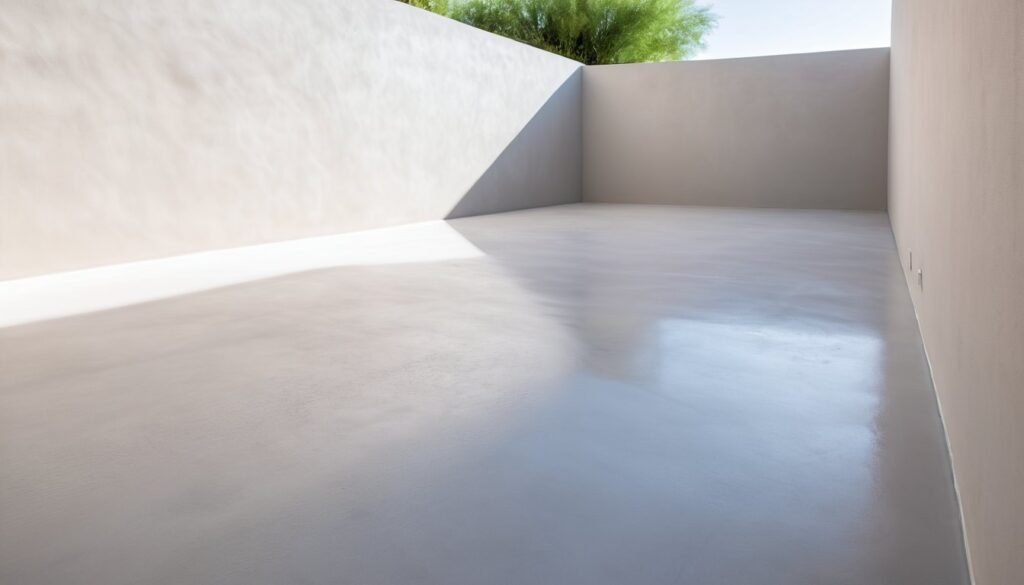
Finishes that handle desert sun
| Finish | How it feels | Good to know |
|---|---|---|
| Light broom finish | Slightly textured, good grip | The classic. Easy on the budget and the feet. |
| Exposed aggregate | Pebbled, cooler than smooth | Hides dust. See stamped concrete services for patterns. |
| Stamped and colored | Stone or tile look | Choose lighter colors. Reseal every few years. |
| Cool deck coating | Smooth, reflective | Reduces surface heat. Needs reapplying over time. |
How concrete patio installation goes
Plan the shape and slope
We mark the size, the finished height and where water will leave.
Prepare the ground
Topsoil, soft spots and roots come out. Base material is compacted in layers.
Set forms and steel
Forms hold the edges. Rebar or wire mesh sits on supports in the middle of the slab.
Pour early
We pour while the air and ground are cooler, and place and finish quickly.
Cut joints and cure
Joints are cut on time and the surface is protected while it gains strength.
If you can stand at the back door and see where the water will go, the patio was built right.
Concrete patio installation questions from Glendale yards
How do I keep a concrete patio from burning bare feet in a Glendale summer?
Three things change how hot a slab gets: color, texture and shade. Dark and smooth surfaces absorb the most heat and hold it. A pale, lightly textured surface reflects more sun and loses heat faster at night. That is why we usually recommend light tan, cream or sand tones, and a broom finish or a fine exposed aggregate instead of a smooth trowel finish.
Sealers matter too. Some glossy sealers look rich but run hot. A matte or light colored sealer is better, and some coatings are made specifically to reflect heat. If you want one, ask us, and we will tell you what to expect and how often it needs a refresh.
Shade is the biggest factor of all. A ramada, a pergola, a shade sail or even a tall block wall on the west side can lower the temperature of the surface and the air above it by many degrees. We like to talk about shade before we draw the patio, because it can change the shape, the location and the finish.
Finally, plan your first patio evening for after sunset. Even a good slab holds heat for hours after a 110 degree day. A quick spray of water cools it, though the effect is short.
How large should a patio be if I want a ramada, a table and a fire pit?
For concrete patio installation, work backward from the furniture, then add shade and walking room. A round table for four fits in about a four foot circle. A rectangular table for six needs roughly three by six feet. Chairs need about three feet behind them to pull out. That gives a comfortable dining area near 12 by 12 feet.
A ramada adds structure. The posts need footings, and the roof overhang changes where rain and shade fall, so we plan the slab and the posts together. Allow a few extra feet on the sides so the shade covers the whole seating area at different times of day.
A fire pit or fire table needs space all the way around it and a safe distance from the house, the ramada and any plants. Local codes and the manufacturer set the clearances. Gas lines and electrical conduit should go in before the pour.
Bigger is not always better. A patio that is too large costs more, collects more heat and can look empty. We mark the layout with paint, set a chair in it and walk around together. For concrete patio installation, ten minutes of standing in the shape saves years of wishing it were different.
Does a backyard patio need a permit or HOA approval?
Sometimes both, so it is worth finding out before the forms go up. A simple slab on the ground, away from property lines and not attached to the house, is the kind of project that many cities treat lightly. A patio with a roof, a wall, gas, electrical power or a connection to the house usually gets more attention. The City of Glendale, or the city where you live, can tell you what applies to your address.
HOAs are the other piece. Many Valley neighborhoods ask for approval of the size, the location, the color and sometimes the finish of anything poured in the yard. Some limit how much of a lot can be hard surface. Ask for the rules, and send a simple sketch with measurements and a sample color.
Utility easements and drainage easements can also limit where concrete can go. Your survey or plat shows them.
We help by asking the right questions up front. Before we price your concrete patio installation, we ask about the lot, the HOA and any structures, and we tell you which offices we would call. Approval can take a few weeks, so ask early.
What color and finish hold up best against desert sun?
In concrete patio installation, lighter colors and simple finishes age the best. Strong sun fades dark integral colors and sealers over the years, and dark colors show dust, hard water spots and wear more. A natural gray, a warm tan or a sandy cream tone hides dust, stays cooler and looks right with stucco and gravel landscaping. They also make future repairs easier to match.
For finish, a light broom gives grip when the patio is wet from sprinklers or a monsoon storm, and it hides small scuffs. Exposed aggregate is another strong choice. The small stones show through the surface, hide dust and stay cooler than smooth concrete. Stamped patterns can look beautiful, but they depend on a good sealer and regular care.
Coatings and sealers need attention. In our climate, sealers wear faster than they do in cool places, and we recommend checking them every couple of years. A penetrating sealer is nearly invisible and holds up well. A glossy film sealer needs more care.
We keep samples at the shop. Bring photos of your house, and we will hold up swatches and compare.
How do you handle slope and monsoon runoff around a patio?
We design for the worst storm, not the average day. Glendale gets only about seven inches of rain a year, but it often arrives in a hurry. A patio poured flat becomes a shallow pond in a monsoon storm, and water that sits against a house or a block wall can cause damage.
So every patio gets a slope. A gentle fall of about an eighth to a quarter inch per foot, pointed away from the house, moves water without being noticeable underfoot. We also look beyond the slab. Where does the water go after it leaves? Gravel beds, swales and drains can carry it to a safe place, away from the house, the pool and the neighbors.
If the lot slopes toward the house, we may add a small drain or a shallow swale along the edge. We also check roof downspouts, because a downspout that empties onto a patio can overwhelm it.
The finish helps too. A textured surface drains and dries faster than a smooth one. With concrete patio installation, water is the part you do not see until the first big storm, so we plan it before the pour.
What is the best way to connect a patio to the back door and a block wall?
In concrete patio installation, the answer is a gap on purpose and heights that match. Concrete and the house move at different rates. The patio expands and shrinks with the sun, and the house does not move the same way. If the slab is poured tight against the wall or the door, one of them will crack.
The usual fix is an isolation joint, a strip of flexible material placed between the patio and the wall before the pour. It lets the slab move without pushing on the structure, and a flexible sealant on top keeps water and insects out. We use the same idea where the patio meets a block wall or a post.
Height is just as important. The patio should sit slightly below the door threshold, with a gentle slope away from the house. If the patio is too high, water runs toward the door. If it is too low, the step down is awkward and hard on knees and wheelchairs.
We measure the door, the flashing and the wall before we set the forms. For concrete patio installation next to a house, small details like these decide whether the job looks and works right for years.