
Concrete Pool Decks in Glendale AZ
Concrete pool decks that stay comfortable under bare feet, drain well and hold their color in the desert sun.
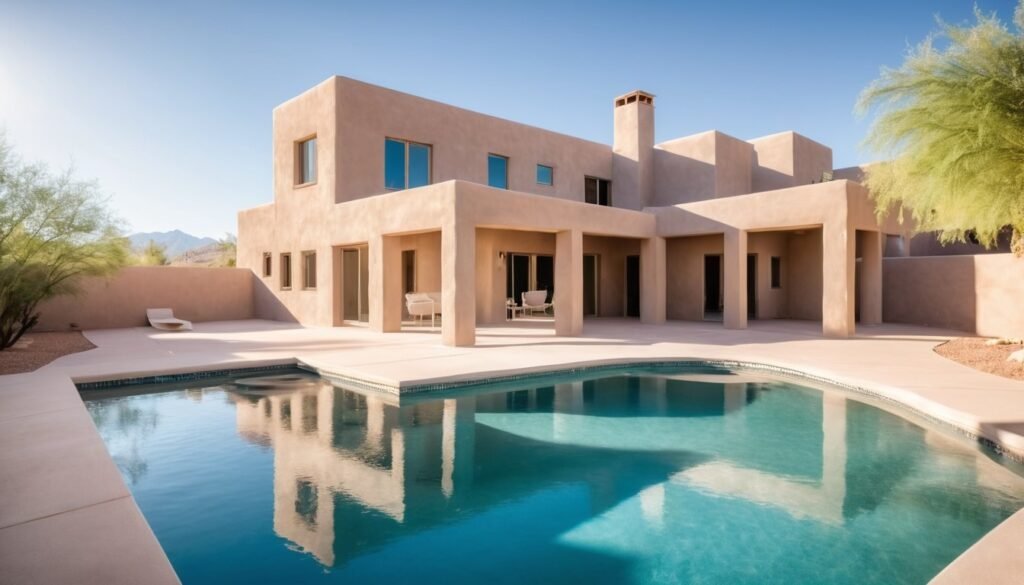
A pool deck works hard, so we build it to match
A pool deck gets sun, water, chlorine, wet feet, patio furniture and kids running. It needs to be cool enough to stand on, grippy enough to be safe and sloped so water runs away. Concrete pool decks can do all three when they are designed that way.
In Glendale, AZ many pools have decks that are cracked, hot, stained or slippery. We build new concrete pool decks, replace tired ones and refinish good ones with a new surface. We work around the pool, the coping, the plumbing and the landscaping, so everything fits together.
What a good pool deck needs
A cooler surface
Lighter colors and textured finishes stay more comfortable in summer.
Grip when wet
Texture that gives feet traction without scraping them.
Slope for drainage
Gentle pitch away from the pool and the house.
Smart joints
Expansion joints around the coping and control joints in the deck.
Protected plumbing
Pool lines located before any digging or breaking.
Stain resistance
A sealer that handles chlorine, sunscreen and hard water.
Pool deck finish choices
| Finish | Feel | Good for |
|---|---|---|
| Broom finish | Light ridges, good grip | Budget friendly, simple decks |
| Spray texture topping | Cool and fine grained | Hot, sunny decks and resurfacing |
| Stamped pattern | Stone or tile look | Decks that double as a feature. See stamped concrete services. |
| Exposed aggregate | Pebbled, rugged texture | Very grippy, but rougher underfoot |
Concrete pool decks questions from Glendale pool owners
How do I keep concrete pool decks from getting too hot to walk on?
Surface color and texture are the two biggest levers. Dark concrete absorbs a lot of sunlight and gets uncomfortably hot, sometimes too hot for bare feet by early afternoon. Lighter tones reflect more sun and stay noticeably cooler. We suggest creams, light tans, soft grays and whites for areas in direct sun.
Texture matters too. A fine spray texture topping, often called a cool deck coating, is made to stay more comfortable than plain concrete. It is a thin, light colored layer applied over a sound deck, and it scatters heat and gives traction. A smooth, dark trowel finish does the opposite.
Shade helps more than any product. A ramada, a shade sail or a palo verde tree near the deck can drop surface temperatures a lot. Water also helps. A quick hose down cools the surface for a short time.
When we plan concrete pool decks, we talk about how you use the pool. If kids and pets spend afternoons there, we lean toward the coolest finish. If the pool is mostly for evenings, you have more freedom to choose color.
We bring samples to your yard so you can test them in the sun before choosing. Feeling a sample at three o'clock in July is the best test.
Is a pool deck replacement or a resurface the better move?
It depends on what is wrong. If the concrete is structurally sound, with only surface problems such as fading, stains, rough patches, minor cracks or a slick finish, resurfacing is usually the smarter, cheaper and faster choice. A thin overlay hides the flaws and creates a new, textured, cooler surface. You can read more on our concrete resurfacing page.
If the deck has serious problems, such as large cracks with height differences, sections that have sunk, a slope that sends water toward the house or the pool, or a bad base, then resurfacing will not last. In those cases, replacing the concrete gives you a chance to fix the cause.
We inspect the deck by tapping, measuring slope with a level and checking the joints near the coping. We look for signs of washout under the slab, because pool decks can lose soil from leaks and splash. We also check where the deck meets the house.
We give you an honest opinion with both options priced. Many owners find that resurfacing the good parts and replacing only the worst sections gives the best value for concrete pool decks.
Can you work around the pool coping, tile line and plumbing?
Yes, carefully. A pool deck touches several delicate parts: the coping around the edge of the pool, the tile line, the skimmers and drains, the bond beam under the coping and the pool plumbing and electrical lines running beneath the deck.
Before any demolition, we locate pool lines. A pool builder's plan helps, as does a scanner or hand digging near known points. We use saw cuts and small tools near the coping to avoid cracking it. We protect the pool with covers, so concrete and dust do not fall in.
An expansion joint between the deck and the coping is important. It lets the deck move a little without pressing on the pool shell. We fill it with a flexible sealant that keeps water out and lets the two parts move independently.
We also respect the pool equipment pad and electrical bonding. If a deck reconstruction affects the bonding wire, an electrician should check it afterward.
If your pool has settled or its coping is loose, tell us before we start. It may be wise to fix it first, since the deck and coping work together. Good concrete pool decks look simple because the details are done correctly.
What slope and drainage should pool decks have?
Water should always run away from the pool and away from the house. The common target is a gentle slope of about one quarter inch per foot, enough to move water without feeling tilted. That is about two percent. Steeper slopes can feel uncomfortable, and flatter ones leave puddles.
Where does the water go? It should flow to the landscape, a drain or an area designed for it. Pool water that splashes onto the deck contains chlorine or salt, so we prefer to send it to a place where it will not kill the lawn or sit against stucco. If the deck is near the house, we keep a firm slope away from the foundation to protect against moisture and, in some soils, swelling.
For existing pool decks, we measure the slope. If it is wrong, we may correct it with an overlay, a new slab or a drain. Trench drains can solve the problem where the ground is flat.
Good drainage also helps the deck dry fast, which means less slipperiness, less algae and less staining. It is one of the quiet details that separates a good deck from a frustrating one.
How do concrete pool decks handle chlorine, salt and hard water?
Pool chemistry and hard water are tough on any surface, and concrete is no exception. Chlorine can fade color and etch unsealed concrete over time. Salt water systems can leave residue and speed up wear on the surface, especially on porous concrete. And hard water from splash and sprinklers leaves white mineral spots that build up.
The defense is a good sealer. A quality penetrating or film forming sealer, chosen for pool use and UV exposure, keeps stains and chemicals from soaking in. We use matte, slip resistant products suitable for wet areas. Reseal every two to three years, or sooner if water stops beading.
Cleaning also helps. Rinse the deck after heavy use, and wash it with mild soap occasionally. For hard water spots, use a cleaner made for concrete and rinse well. Avoid harsh acids on a sealed surface, because they can damage the finish.
In terms of materials, a dense, well finished concrete holds up better. Concrete pool decks that are poured at the right strength, with proper curing, resist chemicals longer.
We give you a short care sheet with the sealer we used. A little maintenance keeps the deck looking fresh for years.
Do pool decks need special permits or barrier rules in Glendale?
Pool and barrier rules matter for safety, and they can affect a deck project. Arizona and local governments have requirements for barriers around residential pools, such as fences or walls of a certain height, gates that self close and self latch, and rules about doors and windows that open to the pool area. When a deck project changes access to the pool, the layout of fences or the grade near a barrier, those rules may apply.
Permit requirements vary, and we recommend contacting the City of Glendale before major changes, such as a full deck replacement, a new deck area or changes to the pool itself. Simple resurfacing of an existing deck may not require a permit, but check to be sure. If your home is in an HOA, they may also have rules about deck colors and materials.
We can build concrete pool decks to match the plans or the existing layout, and we will tell you if we see a safety concern, such as a gap in the barrier or a gate that does not close.
When in doubt, call the city and ask. It takes a few minutes and avoids surprises. A beautiful deck should also be a safe one.