
Concrete Repairs in Glendale AZ
Concrete repairs for cracks, chips, flaking and broken corners, done with materials that handle desert heat so the fix holds and blends in.
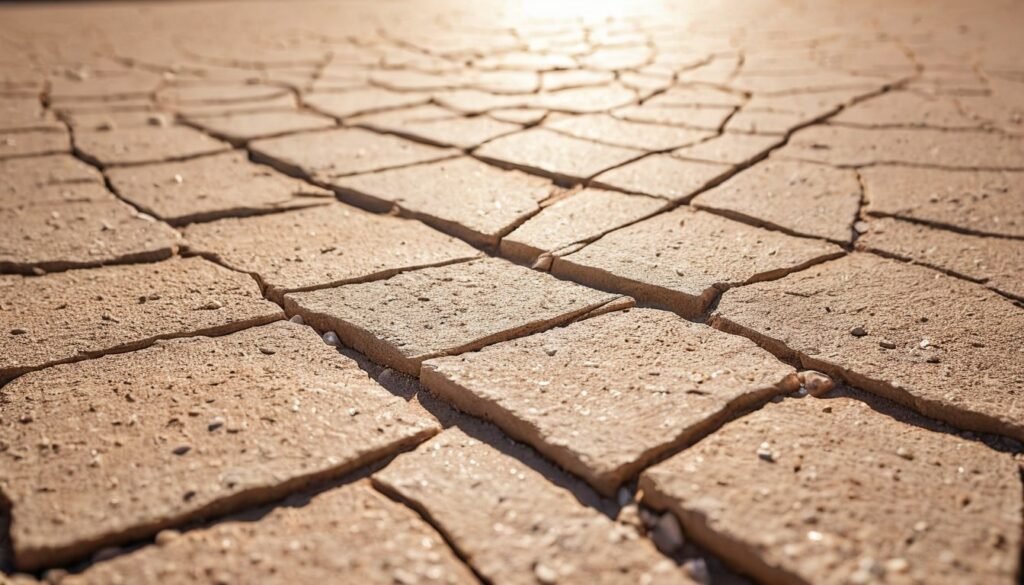
Concrete repairs we do most often
Cracks
Sealed, routed and filled, or stitched, depending on whether they move and why.
Chips and broken corners
Rebuilt with bonded repair mortar, shaped to match the original edge.
Flaking and pitting
Cleaned, patched or resurfaced, depending on how deep it goes.
Holes and voids
Filled and compacted so water cannot wash out more soil.
Trip edges
Ground smooth or lifted so a walk stops catching toes.
Stains and old coatings
Cleaned or removed before we repair so the patch can bond.
A crack is a symptom, not the disease
Walk around any neighborhood in Glendale, AZ and the west Valley and you will see the same things. A hairline crack across a front walk. A chipped step corner. A garage apron that has started to flake. All of them are asking for concrete repairs, and most can be fixed in a day.
The trick is not the repair material. It is figuring out why the concrete failed. A crack from shrinkage will not move. A crack from a settling base will keep growing. A chip from a dropped tool is just an accident. Each one needs its own concrete repairs, and the wrong match wastes money.
If a crack grows, the problem is under the concrete. If it holds still, the problem is on top.
Five fast answers about concrete repairs
- Can you hide a repair?
- Mostly. We match color and texture as closely as the old surface allows, and the sun does the rest.
- How soon can I walk on it?
- Small repairs often take foot traffic in a day. We tell you at the end of the visit.
- Does it matter how hot it is?
- Yes. Repair materials set faster in heat, so we plan the time of day and the product.
- Is a repair permanent?
- It is, when the cause is gone. If water or roots are still there, we handle them first.
- What if it is not worth repairing?
- We say so, and show you why.
How concrete repairs get done
Look and test
We tap the surface for hollow spots, measure the crack and check for movement.
Open it up
Weak concrete is cut out to sound material. Cracks are routed to a clean groove.
Clean and bond
Dust and loose bits go. A bonding agent goes on where the repair meets old concrete.
Fill and finish
The patch or sealant goes in, tooled flat and finished to match the texture.
Cure and protect
We protect the repair from sun and wind while it hardens.
Concrete repairs questions we hear in Glendale
What is the right way to fill a crack in concrete when it is 105 degrees outside?
Carefully, and at the right time of day. Concrete repairs in extreme heat have two problems. The crack is at its narrowest, because the slab has expanded in the sun, and repair materials set much faster than they do on a mild day.
We start by cleaning the crack with a wire brush and a blower, so no dust or loose bits remain. For a hairline crack that does not move, we fill it with a thin repair material or sealant. For a wider crack, or one that opens and closes with the temperature, we cut a groove along it with a saw, usually a quarter to a half inch wide. The groove gives the filler something to grip and room to stretch. We fill it with a flexible sealant, not rigid mortar, because rigid fillers crack again the first time the slab moves.
The heat changes our schedule. We often repair in the early morning, when the slab is cooler and the crack is a little wider. We may shade the area or use a slower setting product.
Do not use caulk from a tube on a moving crack. It looks fine for a month, then peels and lets water in.
What is the difference between a crack filler, a sealant and epoxy?
They behave very differently, and the right one depends on the crack. A crack sealant is flexible. It stays soft, stretches and recovers, and it keeps water out. We use it for cracks that move a little, such as along a joint or across a patio where temperature swings open and close the gap.
A repair mortar is hard. It is a mix of cement, sand and bonding additives that sets up like concrete. We use it for chips, broken corners, spalls and holes, where the surrounding area is solid and nothing is moving. It restores strength and shape.
Epoxy is a rigid, very strong adhesive. It works well for structural cracks in some indoor floors and walls, where it can bond the two sides together. Outdoors in Arizona sun, plain epoxy can yellow, chalk and fail from heat and UV, so we use it carefully.
Using the wrong material in the wrong place is how repairs fail. A rigid mortar in a moving crack will pop out. A soft sealant in a broken corner will never hold the shape. Part of good concrete repairs is simply choosing the right product, and we explain our choice on the estimate.
My concrete is flaking and pitting on the surface. Can that be fixed?
Usually yes. Flaking is called scaling or spalling, and pitting is when small pieces pop out and leave holes. In our desert climate, the causes are different from those in cold places. We rarely see freeze and thaw damage, but we see plenty of problems caused by the sun, the water and the mix itself.
One cause is a weak surface from the original pour. If the concrete was finished while bleed water was still on top, or if it dried too quickly in the heat, the top layer can be weak and wear away. Another is hard water and salts from sprinklers, which leave deposits that can break down the surface over time. A third is chemical attack from fertilizer, pool chemicals or cleaners.
If the damage is shallow and the concrete is sound underneath, we can often clean it, patch the worst spots and either seal it or apply a thin overlay. See our concrete resurfacing page. If the damage is deep, we may cut out and replace sections.
To help prevent it, keep sprinklers off the slab and rinse off chemicals. Concrete repairs go further when the cause is handled.
Can you rebuild a broken step edge or a chipped corner?
Yes. A broken step edge is one of the most common concrete repairs we do. Edges take the abuse of feet, hand carts, bikes, pets and, in many yards, the heavy drip of a sprinkler head. They chip first.
We cut away the loose and crumbling concrete until we reach solid material, and we clean the surface. A bonding agent goes on, and then we build the edge back with a repair mortar, sometimes in layers. We shape the nosing and the rise with a trowel or a small form board, so they match the original. When it sets, we finish it with a light brush so it grips like the rest of the step.
If the step is cracked all the way through, or if the whole thing is tilting away from the house, a patch will not hold. Then we talk about lifting it or rebuilding it. Any step that moves under your foot is a safety problem, and we would like to fix it before someone falls.
Bring a photo, and tell us about the heat. Repair mortar behaves differently at 108 degrees, and we plan the visit for the cool part of the day.
When is a crack a sign of something bigger, like foundation trouble?
Most cracks in patios, walks and garage floors are minor. A few point to larger problems, and it is worth knowing the difference.
Be concerned if a crack runs along a house wall or a foundation, if it is wider at the top than the bottom, if it forms a stair step pattern in block or stucco, or if doors and windows start sticking at the same time. Also watch for cracks that grow quickly, a floor that slopes toward one side, or a gap opening between the slab and the wall.
Those can be signs of settling, soil washout or expansive soil, and they deserve a closer look. In some parts of the Valley, soils swell when wet and shrink when dry, and plumbing leaks can add to the problem. For serious structural issues, you need a structural engineer. We do not pretend to be one. We do concrete repairs on slabs and foundation edges, and we are honest about where that ends. Our foundation repair page explains what we can do.
When in doubt, send us photos with a coin for scale. If the crack is near a house wall, send a photo from a step back, too.
Will I be able to see where the repair was made?
A good repair blends in, but it will rarely disappear on day one. Fresh patches are lighter or darker than old concrete, and the texture can be slightly different. Over several months, strong desert sun, dust and weather even things out, and most people stop noticing.
Here is how we shrink the scar. We cut straight lines where we can, since a neat saw cut looks like a joint rather than a mistake. We match the finish, broom for broom and smooth for smooth. We choose a repair product tinted to match when color matters. And we feather thin patches carefully so they do not leave a ridge.
If a surface is badly worn or stained, a spot repair can look worse than the original problem, like a bandage on a bruise. In that case, resurfacing the whole slab with one even finish makes more sense, and we will show you samples before you decide.
Whatever we do, we tell you what to expect after a week and after a year. That way concrete repairs do not come with surprises.