
Concrete Driveway Building in Glendale AZ
Concrete driveway building for new homes and replacements, built thick enough for real weight and jointed so cracks hide where they belong.
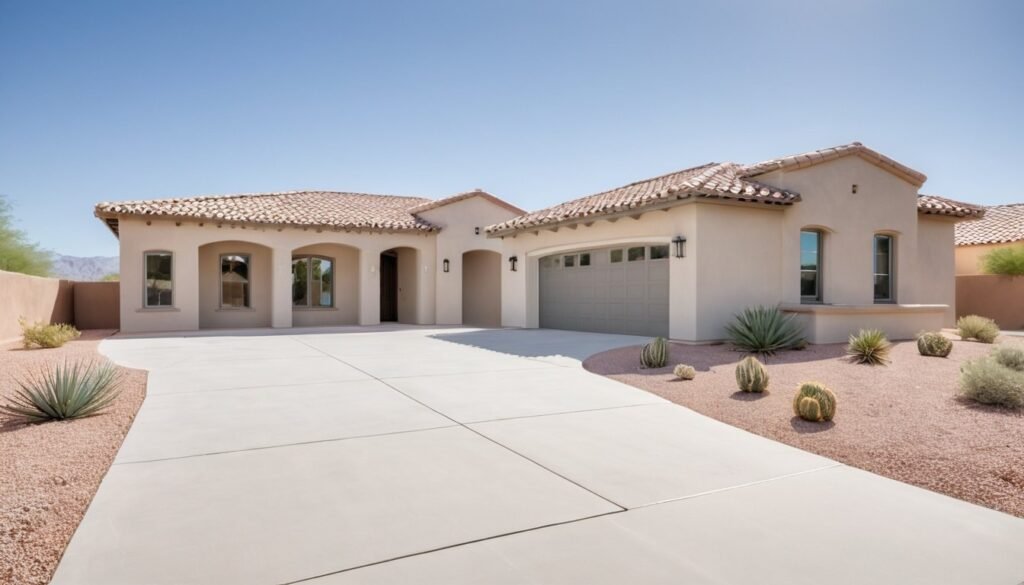
The driveway is the first thing people see and the last thing people plan
Picture the new house on a corner lot in the Valley. The stucco is done, the landscaping is in and someone says, we still need a driveway. It gets squeezed into the final week, in the heat, on a rush.
We would like you to plan it earlier. Good concrete driveway building in Glendale, AZ starts with the grade and the drainage and ends with joints and a cure. In between there is a lot you cannot see once the concrete is down, like the depth of the base and the position of the steel.
Concrete driveway building, one layer at a time
Survey the slope and the water
We stand at the street and at the garage door and decide where the water goes. A driveway that drains toward the garage is a driveway you will regret.
Excavate and build the base
Soft soil comes out and base material is compacted in layers. We plan around caliche before we dig.
Set forms and steel
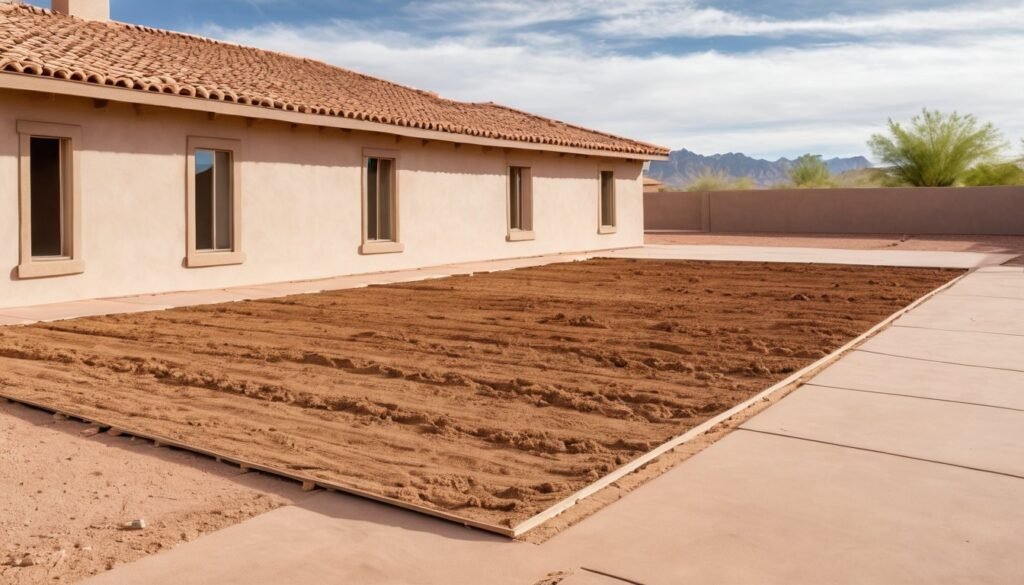
Forms give the edges, the curves and the thickness. Rebar or wire mesh sits on supports in the middle of the slab.
Pour and finish
We pour early, place and level the concrete and give it a broom finish for grip.
Cut joints and cure
Joints are cut on time, and the driveway is protected while it gains strength.
Concrete driveway building: thickness and strength in plain English
A driveway for cars is usually four inches thick. We often recommend five, with a thickened edge, if you will park a heavy truck, a trailer or an RV on it, or if the soil is soft.
Strength matters too. We ask for concrete suited to the temperature, and we do not let anyone add water to the truck to make the finish easier. A little extra water makes the surface easier to work and the concrete weaker for the rest of its life.
Concrete driveway building questions from Glendale homeowners
How wide and how thick should a new concrete driveway be?
For concrete driveway building, start with how you park. A single car needs about ten feet. Two cars side by side are comfortable at twenty feet, and twenty four feet gives room to open doors without scraping. If you have a truck, a trailer or guests who park often, tell us, and we will add a side pad or a turnaround.
Thickness depends on the weight. A standard residential concrete driveway is four inches thick, on a compacted base of about four inches. If you park a heavy truck, a loaded trailer or an RV, five inches with a thickened edge is a better choice. The edge matters, because wheels ride it and mowers and trucks chip it.
In the Valley, we also think about heat. A thicker slab is more stable and less prone to curl and crack in the sun. Steel inside the slab keeps cracks tight.
The apron, where the driveway meets the street, usually lies in the public right of way and may have its own width and thickness rules. The City of Glendale, or whichever city you live in, can tell you what applies. We measure the whole thing and mark the shape in paint before we dig, so you can walk it.
How do you design a concrete driveway to handle monsoon runoff?
We start from the water, not the concrete. A driveway is a large, hard surface, and in a monsoon storm it can shed a surprising amount of water in a short time. If the slope is wrong, that water runs into the garage, floods a low spot or washes out the landscaping next door.
So we measure the grade at the street, the apron and the garage door, and we decide where the water should go. A gentle crown or cross slope sends water to the sides. At the bottom, we may add a shallow swale, a drain or a gap in the curb, so water leaves without ponding. At the garage, we set the height of the slab so it slopes away from the door.
The finish matters too. A textured surface drains and dries faster than a smooth one, and it keeps its grip when wet.
During concrete driveway building, we also protect the surroundings. Gravel yards, planting beds and neighboring walls can be damaged by concentrated runoff. We think about where the water ends up, and we adjust the design so it lands somewhere safe.
Do I need a permit for a driveway or a wider curb cut?
Often yes, especially for work at the street. Replacing a driveway on your own property may be simple. But the apron and the curb cut, where the driveway meets the street, usually belong to the public right of way. The city or county controls the width of the opening, the thickness of the concrete, the slope and the drainage. A wider curb cut or a new driveway location almost always needs approval.
In Glendale, that means the City of Glendale. Other cities, such as Peoria, Surprise or Goodyear, have their own offices and rules. Roads that are not city streets may fall under the county or the Arizona Department of Transportation.
HOAs add another layer. Many require approval for the width, the material and the color of a driveway, and some limit the amount of paving in front yards.
We do not guess. When you ask about concrete driveway building, we ask for your address, the road name and any HOA, and we tell you which offices we would call. We can help prepare a simple sketch for a permit.
A five minute phone call at the start saves weeks of delay later.
Which driveway finish is safest and coolest in the heat?
For concrete driveway building, a light broom finish is the best all around choice. Dragging a stiff broom across the surface while the concrete is still soft leaves tiny ridges that grip tires and shoes, even when the driveway is wet from a monsoon storm or a hose. It also hides small scuffs and is easy to clean.
Exposed aggregate is another good option. The top layer of cement is washed away to show small stones, which gives excellent grip and stays a little cooler than a smooth surface. It also hides dust and dirt, which is helpful in a desert yard.
Smooth trowel finishes look clean but are slick when wet and hot in the sun, so we do not recommend them for driveways. Stamped finishes can look attractive, especially as a border or an apron, but they need a good sealer and regular care.
Color matters for heat. Lighter shades such as tan, cream and light gray reflect more sun and are easier on bare feet, pets and the garage door. Darker colors absorb heat and show wear.
Bring a photo of your house. We will hold up samples and help you choose a finish for your concrete driveway building project.
How do I protect a new concrete driveway during its first year?
After concrete driveway building, most of the work is in the first few weeks. Concrete gains strength over about a month, and the surface hardens as it cures. During that time, keep sprinklers off the slab, since constant moisture on the edges can stain, and avoid heavy loads. Light cars are fine after about a week. Heavy trucks, trailers and RVs should wait longer, and we give you the date in writing.
Sealing is optional but helpful. A penetrating sealer fills the pores and helps resist oil stains, dust and hard water marks. We usually recommend waiting about a month before sealing, so the concrete has cured and dried. Sealers wear faster in strong sun, so check the surface every couple of years.
Watch the joints. A flexible sealant in the control joints keeps water and dirt out. If you see it split, reseal it.
Avoid de icing salts and fertilizers on the edges. Wash off oil and fuel spills quickly. And keep roots from pushing at the slab by trimming nearby plants.
Small habits keep a concrete driveway looking new. We leave a care sheet with every job.
Can I add an RV pad, a side gate or a turnaround to the driveway while we are building it?
Yes, and it is the best time to do it. Adding a wider section later means a cold joint and a patchwork look. Planning it now lets us pour everything in one visit, with the same finish and strength.
For an RV pad, tell us the length and weight of the rig. A long, heavy motorhome needs a thicker slab, more steel and a deeper base than the part of the driveway used by cars. We can build the RV section thicker and tie it to the rest. Allow enough width for slide outs and for walking around the vehicle.
For a side gate, the concrete has to match the gate swing and the wall. We set the heights and the slope so the gate opens freely and water drains away from it. If the gate will have a motor or a keypad, conduit should go in before the pour.
A turnaround saves you from backing into a busy street. We can shape it as a hammerhead or a curved bulb, depending on the space.
Plan your extras before concrete driveway building starts, and we will work them into the drawing.
Before you sign a concrete driveway building quote, ask
How thick will it be, and how much base is under it?
Four inches of concrete on four inches of compacted base is common. Anything thinner deserves a second look.
Where will the joints go?
A driveway without planned joints will make its own. Ask to see a sketch with the cut lines drawn in.