
Concrete Parking Lot Building in Glendale AZ
Concrete parking lot building for small businesses and property owners, planned for heavy loads, rain and the long, hot afternoons of the west Valley.
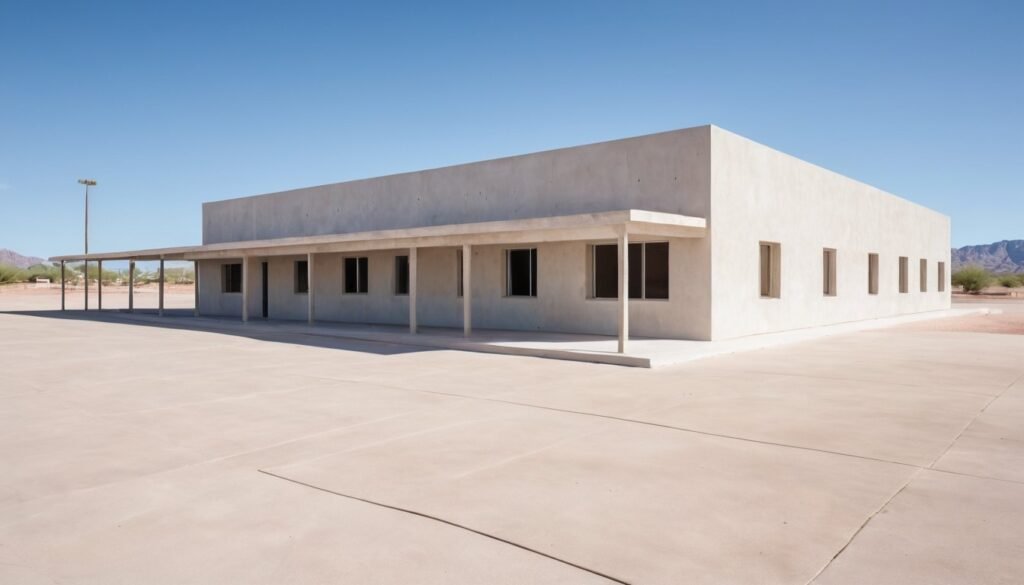
Concrete parking lot building, quick comparison
| Question | Concrete | Asphalt |
|---|---|---|
| Summer surface heat | Lighter color reflects more sun | Dark surface absorbs more heat |
| Typical life with care | Many decades with joint upkeep | Shorter, with sealing and patching |
| Upfront cost | Usually higher | Usually lower |
| Heavy dumpster and truck spots | Excellent, holds up to turning wheels | Can rut and scuff in the heat |
A parking lot is a business card you drive on
Customers form an opinion about a business before they open the door, and the parking lot is the first thing they see. Cracked, puddled or confusing pavement says something, and it is rarely good.
Concrete parking lot building in Glendale, AZ is a smart choice for shops, medical offices, churches, schools, small apartment properties and light industrial yards. Concrete resists the ruts, soft spots and oil softening that asphalt can suffer in the Valley heat, and its lighter surface keeps the lot a little cooler.
How concrete parking lot building is planned
Site walk and goals
We look at traffic, trucks, entrances, the building and where water flows.
Drainage plan
Slopes, drains and outlets are set so rain leaves the lot instead of ponding.
Stall and aisle layout
Parking stalls, aisles, accessible stalls and loading areas are laid out and marked.
Base and steel
Soil is compacted, base is placed and reinforcement is set to the design.
Pour, joint and cure
Concrete is placed in sections, jointed on a grid and cured carefully.
Stripe and finish
Curbs, wheel stops, striping and signs go in last.
Concrete parking lot building questions from Glendale property owners
Why choose concrete parking lot building over asphalt in the Arizona heat?
Concrete parking lot building costs more at the start, but it can win over the long run, especially in a climate like ours. There are a few reasons.
Heat is the biggest. Asphalt is dark and soft in summer. In July, a hot asphalt lot can soften enough to take imprints from kickstands, truck tires and dumpster wheels, and it can rut where vehicles turn. Concrete stays firm. Its lighter color reflects more sunlight, so the lot is a bit cooler for people and vehicles, and there is less heat radiating into the surroundings.
Durability is next. A well built concrete lot can last decades, with periodic joint sealing and the occasional panel repair. Asphalt usually needs sealing, patching and eventually a new surface sooner.
Lighting is a small bonus. Light colored pavement reflects more light at night, which can help security lighting work better.
The tradeoffs are cost and repair. Concrete has a higher upfront price, and repairs are made panel by panel. For a property you will own for many years, or one with trucks, dumpsters or heavy turning traffic, concrete is often the better value. We will help you compare both over a long period.
How do you plan drainage so a lot does not flood during a monsoon storm?
By treating water as the main design problem, because it is. The Valley's monsoon season can drop an inch of rain in an hour, and flat lots hold it unless they are shaped to move it.
In concrete parking lot building, we set slopes so that water flows away from buildings, doors and low spots toward drains, swales or the street, depending on what is allowed. A typical parking slope is gentle, steep enough to drain, but not so steep that doors swing open or carts roll. We use a laser or a level to set grades before the concrete is poured, and we check them again as we finish.
We look at where the water goes next. Cities have rules about stormwater, retention and discharge, and a commercial lot may need an engineer's drainage plan. We work from the engineer's design when one is required, and we follow the grades on the plans carefully.
Details matter. Valley gutters, curb cuts and catch basins all need to line up. A mistake of a quarter inch can create a puddle that lasts for days.
After we pour, we check the lot with a hose or after a rain, and we fix any low areas while the project is still fresh.
Can you lay out ADA accessible stalls and routes when building a lot?
Yes. Accessible parking has specific size, slope and location requirements, and getting them right matters for your customers and your legal risk. In general, accessible stalls need to be wide enough to open a vehicle door fully, with an adjacent access aisle for a ramp or lift. The surface in those areas must be firm, stable, and nearly level, typically no steeper than about two percent in any direction. Stalls are placed on the shortest accessible route to the building entrance, and signs must be mounted at the proper height.
Our role in concrete parking lot building is to build what the plans specify. We set grades with care at the accessible stalls, because that is where slope mistakes happen most. We also place curb ramps and walks with proper slopes and widths.
Requirements can vary by project, and your architect, engineer or the City of Glendale will confirm what applies. If you do not have plans, tell us. We can recommend a designer who handles accessible layouts.
A lot that is easy for everyone to use is a better lot, and it protects you from expensive corrections later.
How thick should concrete be for cars, delivery trucks and dumpsters?
Thickness depends on what rolls over the concrete. For passenger cars and light pickups, five inches is common. For areas with delivery trucks, garbage trucks, buses or heavy equipment, six to eight inches, with steel reinforcement, is more typical. Dumpster pads and loading zones take the hardest hits, because of their weight and the way they stop and turn, and these are often thicker and heavily reinforced.
Base matters as much as thickness. A thick slab on soft soil will still crack. We compact the soil and place a layer of gravel or base course, often several inches, to spread the load evenly. Where the soil is poor, the plan may call for more.
We also think about joints. Control joints are cut in a grid, usually spaced about two to three times the thickness in feet, so that shrinkage cracks follow the lines. Dowels at joints in heavy areas help panels share loads, instead of one panel dropping below its neighbor.
For your concrete parking lot building project, we ask what vehicles will use it and how often. Then we recommend thickness and steel that fit. It is better to spend a little more at the start than to repair the same lot in five years.
How long will a new concrete parking lot take, and can my business stay open?
Timing depends on size, weather and complexity. A small lot for a shop or office might take a week or two from demolition to striping. A larger lot, or one with many drains, curbs and accessible features, can take several weeks. Concrete also needs time to cure. Light traffic can usually return after about a week, and heavy traffic after a few more days, depending on the mix.
Most owners need to keep working, so we plan in phases. We might build half of the lot while customers use the other half, or work at night or on weekends for the busiest areas. We set up clear signs, temporary parking and walkways, and keep the entrance open where possible. Safety is always first, with barricades and flaggers when needed.
Communication helps. We give you a schedule, tell you which areas will be closed and when, and let you know about any weather delays. Monsoon storms can interrupt a pour, and extreme heat shifts our hours earlier in the day.
Tell us about your busy times, deliveries and customer habits. Concrete parking lot building can be done around your business with some planning.
What maintenance does a concrete parking lot need once it is built?
Less than most surfaces, but not nothing. The main task is joint care. Over the years, the sealant in the joints between panels dries out and cracks. If water gets into the joints, it can wash out the base and cause settling. We recommend inspecting joints every year or two and resealing them as needed.
Other simple tasks include sweeping to remove sand and debris, cleaning oil and fluid spills quickly, washing stains with mild cleaners, and restriping when paint fades. Keep an eye on drains and gutters, and clear them before monsoon season. If a panel cracks or sinks, repair it early. Small repairs are inexpensive, while neglected ones spread.
Concrete does not need sealing like asphalt, but a penetrating sealer can reduce stains and help the surface last longer in high traffic areas. Avoid deicing chemicals. They are rarely used here, but they can damage the surface.
We give you a short maintenance plan when we finish concrete parking lot building. It lists what to check, how often and who to call. Following it will keep the lot looking good and working well for decades.