
Driveway Repairs in Glendale AZ
Driveway repairs that begin with a plain question: why did this crack, and will it happen again after the next monsoon?
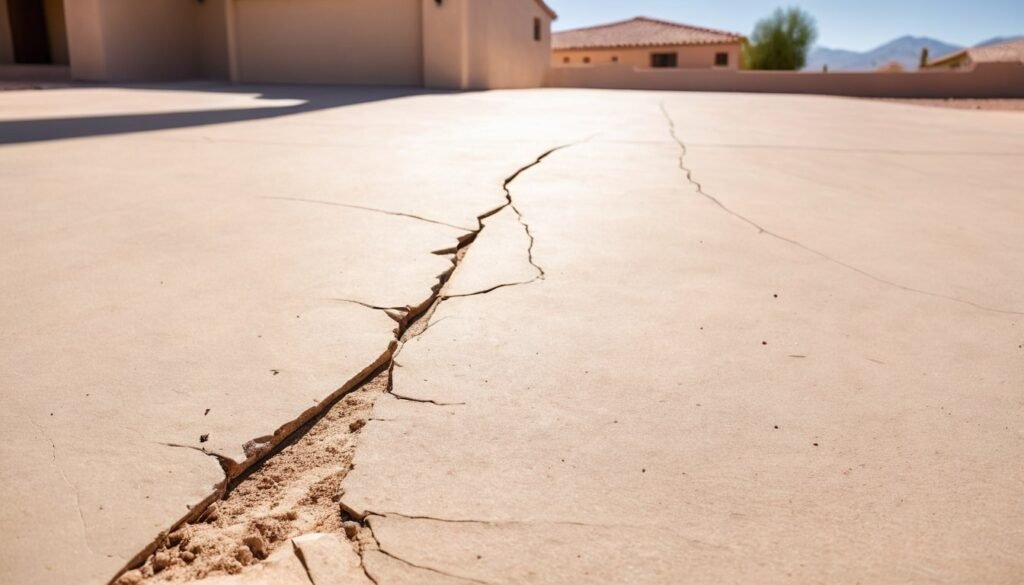
Most driveway repairs start with a photo and a coin
The photo usually shows a crack, a tilted corner or a chipped edge, with a quarter laid next to it for scale. We like those pictures. They tell us a lot before we drive over.
Good driveway repairs in Glendale, AZ are less about the crack and more about what caused it. A crack from summer shrinkage is a different job from one caused by a washed out base or a mesquite root. Fill only the line, and the cause is still there, waiting.
Patch, seal, replace a panel or start over?
Here is how we sort driveway repairs.
| What we find | Usually the right fix | Why |
|---|---|---|
| Hairline crack along a joint | Clean and seal | Keeps water out of the base. |
| Crack wide enough to catch a coin | Rout and fill with flexible sealant | A moving crack needs a filler that stretches. |
| One panel sunk or broken | Cut out and replace the panel | The rest is fine, so leave it alone. |
| Faded, crazed or rough surface | Concrete resurfacing | A new skin beats a tear out. |
| Slab dropped but not broken | Concrete leveling | Lift it back to where it belongs. |
| Cracked everywhere, thin, no base | Replace the driveway | Repairs would only buy a season. |
How we repair one bad panel
When one panel has failed and the rest is sound, we cut along the joint lines with a saw so the edges stay clean. We break out the panel, look at the base and fix it if it is soft or washed out. Then we form, set steel, pour and finish a new section to match.
New concrete never looks identical to old concrete at first. Sun and time blend them. If color matters to you, tell us before the pour and we will show you your options.
Driveway repairs questions from Glendale homeowners
Is the crack in my driveway just cosmetic, or does it need attention?
Most cracks start as cosmetic. A thin hairline, especially one that follows a joint, is concrete doing what concrete does as it shrinks and heats up in the sun. For driveway repairs, we do not rush to fix those, but we do like to seal them so that water and dirt cannot reach the base.
A crack becomes a problem when it widens, when one side sits higher than the other or when you see several cracks close together. A crack wide enough to slide a coin into means the pieces are moving. A step at the crack means the base underneath has dropped, which points to washout or settling.
There is another clue. If the crack runs toward a downspout, a sprinkler head or a low spot where water gathers, water is probably the cause. Fix the water and the crack usually stops growing.
Here is an easy test. Put a pencil mark at each end of the crack and measure the width once a month for a season. If nothing changes, seal it. If it grows, call us for driveway repairs while the fix is still small.
How do you repair a driveway panel that dropped near the garage or the street?
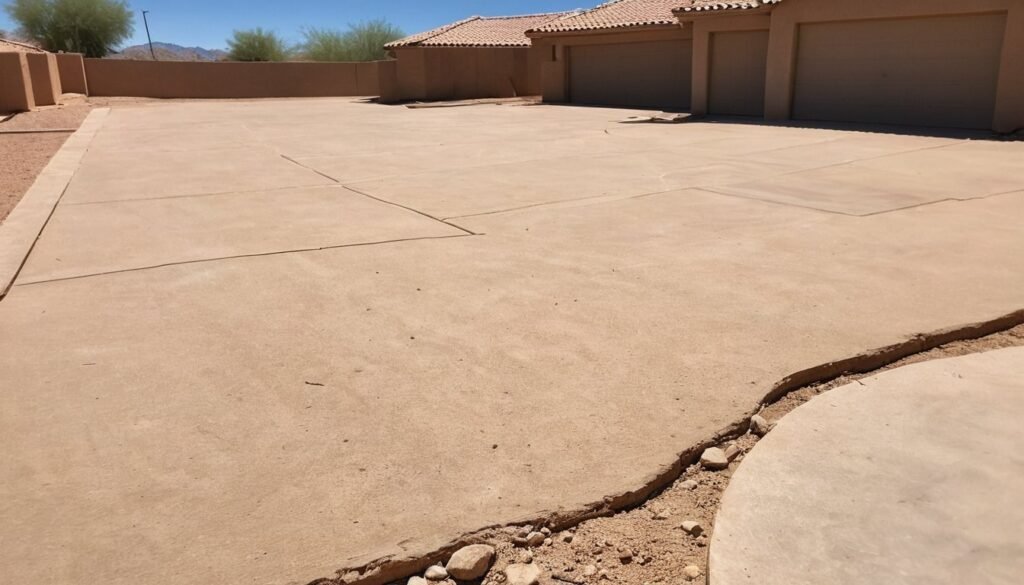
First we find out why it dropped. A panel that sinks near the street or the garage usually lost the soil under it. Monsoon runoff, a leaking pipe, a broken sprinkler line or a poorly compacted base can wash out or compress the ground below, leaving a void that the slab slowly settles into.
If the panel is in one piece and the surface is good, we can often lift it back to level. Our concrete leveling page explains how. We drill small holes, pump a stabilizing material underneath to fill the void and raise the slab, then patch the holes. It is quick, it saves the concrete and it costs less than replacement.
If the panel is cracked into pieces, crumbling or too thin, replacement makes more sense. We cut it out along the joints, rebuild the base, set steel and pour a new panel at the right height.
In either case, we fix the cause. We check drainage, downspouts and sprinklers. A repaired driveway sitting on the same washed out soil will drop again. Good driveway repairs fix the base as well as the surface.
Will a patch or a new panel match the color of my old driveway?
It will be close, and time does the rest. New concrete starts out darker, and over several weeks or months, the sun and dust lighten and blend it with the old slab. Desert sun is strong, and most patches blend in within a year.
Color matters to some people, and driveway repairs deserve a straight answer. We choose the mix and the finish to match the surrounding concrete as closely as we can. If your driveway has an integral color, tell us before we start, and we will talk through what is possible. For a decorative or colored surface, we may recommend resurfacing the whole slab, so the color is even.
Two tricks help. One is the saw cut. We cut out a section along an existing joint where possible, so the line between old and new looks like a joint, not a scar. The other is the finish. A broom finish hides small color differences better than a smooth one.
If you want to see examples, ask. We will pull photos from our files and show you how repairs looked when they were new and a year later.
Why does my driveway have a web of fine hairline cracks on the surface?
That pattern is called crazing, and it is usually a surface issue, not a structural one. It happens when the top layer of concrete dries and shrinks faster than the concrete underneath. In the desert, that is common. Hot sun, dry air and wind can pull moisture out of the surface during the first hours after a pour, especially if curing was late or incomplete.
Crazing looks like a fine spider web or a map of tiny cracks, often less than a hair wide. It does not usually affect strength. It can collect dirt and make the surface look old before its time.
What helps? For mild crazing, a penetrating sealer can reduce staining and protect the surface. For heavy crazing, or when you want a cleaner look, resurfacing can renew the top layer. Our concrete resurfacing page explains how.
If you are planning new work, the prevention is good curing. We start protecting the surface as soon as it can take it, with curing compounds and covers. When you call about driveway repairs, send a close photo and tell us how old the driveway is.
Could my sprinklers, tree roots or pool plumbing be behind my driveway problems?
Yes, all three can, and they are often overlooked. A sprinkler head that leaks or sprays onto the edge of the driveway keeps the soil under it wet, which can wash out fine material and soften the base. Over time, the slab drops. A broken irrigation line under the driveway can cause the same thing, but it hides underground.
Roots are another culprit. Mesquite, palo verde, ash and other desert and landscape trees send roots wide, and they can lift or crack a slab. Roots go where the water is, and a leaky line or a wet edge draws them in.
Pool plumbing is a third. A slow leak in a pool line or a fill line can saturate the ground and undermine concrete nearby.
Before we do driveway repairs, we look for these things. We check where the sprinklers spray, where the downspouts empty and where the tree roots are. We may suggest a pressure test of a suspect line, or an arborist's advice for large trees.
Fixing the repair without fixing the water is like bailing a boat without patching the hole.
How long should a driveway repair last in the desert, and when is replacement the smarter move?
A sealed hairline crack can last years if you keep an eye on it and reseal every few seasons. A routed and filled crack in a moving joint lasts a few years before the flexible sealant wears out in the sun. A new panel poured to replace a broken one should last as long as the rest of the driveway, because it is the same material on a better base.
Repairs fail mostly because the cause was ignored. If water is still running under the slab, if a root is still growing or if a heavy truck still crosses the edge every morning, the repair will not hold.
Replacement is smarter when the damage is widespread. If many panels are cracked, if the slab is thin or has no steel, or if the base is gone, spending money on patches is like buying a new coat of paint for a house with a bad foundation.
We look at the whole driveway and tell you honestly. We often write two estimates, one for driveway repairs and one for replacement, so you can see the numbers side by side. We would rather you spend less on the right fix than more on the wrong one.
The driveway repairs checklist we follow
Find the cause
We check the slope, the sprinklers, the roots and the base before touching the crack.
Clean and prepare
Loose bits, dust and old filler come out so new material can bond.
Repair or replace
Crack fill, panel replacement or lifting, whichever fits.
Seal and protect
Flexible sealant keeps water out, and a surface sealer can help against stains.
Write it down
We note what we did and where, so we can check on it next time.