
Stamped Concrete Services in Glendale AZ
Stamped concrete services that give patios, walks and driveways the look of stone or tile, with the strength of concrete.
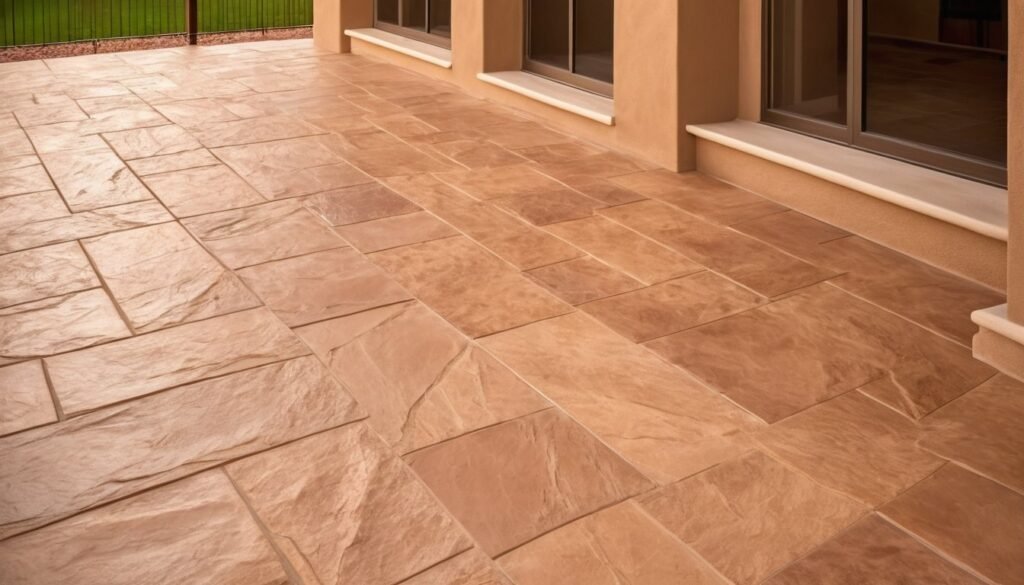
Stamped concrete is concrete that is dressed up
Stamped concrete services start with an ordinary pour and add personality. While the concrete is still workable, we press patterns into the surface with large rubber mats, add color and finish with a sealer. The result looks like slate, flagstone, brick or wood, but it behaves like a concrete slab.
In Glendale, AZ people ask for stamped concrete services on patios, pool decks, front walks, driveways and entry courts. It is a popular choice when you want the look of natural stone without the cost of cutting and laying it piece by piece.
Popular patterns in stamped concrete services
Ashlar slate
Large, irregular stones with natural texture.
Flagstone
Soft, organic shapes that look like desert stone.
Cobblestone
Small, rounded stones with a village feel.
Brick running bond
Classic and tidy, in warm or cool colors.
Wood plank
The look of weathered boards, but no rot or splinters.
Large format tile
Clean, modern squares and rectangles.
What makes stamped concrete services last is the part nobody sees
A stamped slab is only as good as the slab underneath. We start with a firm, compacted base, steel reinforcement and a mix designed for finishing. Control joints are planned to follow the pattern, so cracks hide in the design lines.
On pour day, timing is everything. Color goes on, texture skins are laid, and stamps are pressed in a precise sequence before the concrete stiffens. In Arizona heat, we start early, because the working window is short.
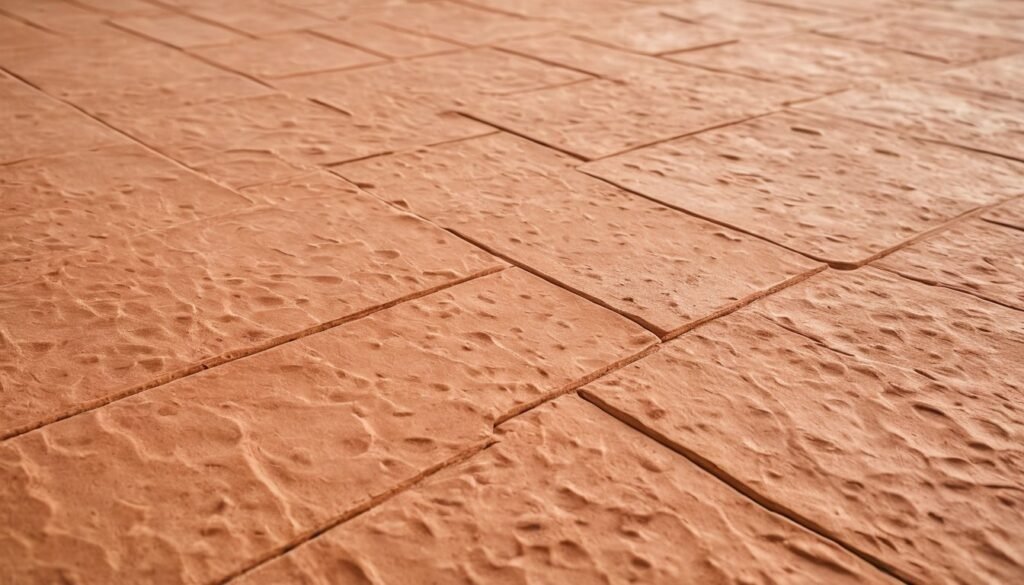
Stamped concrete services, color and finish for desert sun
| Choice | What it does | Our advice |
|---|---|---|
| Integral color | Mixed through the concrete | Chips do not show a different color underneath |
| Color hardener | Sprinkled on the surface | Rich, deep color and a harder surface |
| Release agent | Prevents sticking and adds accent shading | Gives the antique, stone look |
| Sealer | Protects color and stains | Matte for grip. Plan to reseal every few years |
Stamped concrete services questions from Glendale homeowners
How do stamped concrete services hold up in Arizona sun and heat?
Stamped concrete services hold up well when the work is done right and the surface is cared for. Concrete itself handles heat easily. The part that needs attention is the color and the sealer, which fade and wear in strong sun.
UV light slowly bleaches pigments, especially darker colors. We recommend mid tone and lighter shades, which fade less visibly and stay more comfortable underfoot. Integral color, mixed through the concrete, is the most durable, since the color runs all the way through. Surface applied color hardener and release agents give richer, more natural variations, and they can be refreshed with a new sealer.
Sealer is the main maintenance item. In the Valley sun, a good quality sealer needs a fresh coat about every two to three years, depending on exposure. A resealed stamped patio looks wet and rich. An unsealed one looks dull and can stain.
Heat on the surface matters too. A dark stamped patio in direct sun can become very hot. A lighter color, a bit of shade and a textured finish all help. With sensible choices and a little upkeep, stamped concrete will look good for many years.
Is stamped concrete slippery, especially around a pool?
It does not have to be. The key is the surface texture and the sealer. Stamped patterns add some natural texture, because stone and slate molds have pits and ridges, and that helps with grip. But a glossy, smooth sealer on top can make any surface slippery when wet.
For patios, walks and pool decks, we use a matte or low sheen sealer with a fine slip resistant additive. The additive is a tiny grit that gives traction without feeling rough on bare feet. We also choose patterns with more texture where water is common. A deeply carved slate pattern grips better than a flat tile pattern.
Around a pool, we place safety first. We choose a pattern and color that stay cool, we slope the deck so water drains away and we avoid anything polished. If you have kids, older family members or anyone with mobility concerns, tell us. We can show you samples and test them with water.
Stamped concrete services are about looks and function together. A beautiful patio that feels unsafe is not a good patio, so we will always lean toward the choice that keeps feet steady.
How much do stamped concrete services cost compared with pavers or plain concrete?
Stamped concrete usually costs more than a plain broom finished slab and often less than natural stone or high end pavers. The exact numbers depend on the project, so we give written estimates, but the general ranking holds.
What adds to stamped concrete cost is the extra labor and materials: color, release agents, stamping tools, a larger crew and sealer. Complex patterns, borders and multiple colors add more.
What saves money over time is durability and low maintenance. Pavers can shift, sink and grow weeds in the joints, and individual pieces may need resetting. Stamped concrete is one solid slab, which means fewer weed and ant problems, and it needs only periodic sealing. On the other hand, if a stamped slab cracks badly, repairing it so the pattern and color match is harder than replacing a paver.
We discuss the trade offs openly. For a large patio on a tight budget, a plain slab with a colored border may give the best look for the money. For an entry court that you want to feel special, stamped concrete may be worth it. Samples and photos will help you decide.
Will stamped concrete crack, and can the cracks be hidden?
Stamped concrete services still involve concrete, and concrete cracks. The goal is to control where cracks form and to make them hard to see.
We do this with control joints, saw cuts or tooled grooves placed to follow the pattern. In a slate or flagstone design, joints are hidden along the lines between stones, so if the concrete cracks, it does so in a place where it looks like a seam. Good base preparation, proper thickness, steel or fiber reinforcement and careful curing reduce random cracking.
If a hairline crack appears, it can often be filled and colored to blend in, using flexible fillers and stains. Wide cracks or settled panels are harder to hide and may need to be cut out and replaced.
Heat makes curing more important. A slab that dries too fast is prone to shrinkage cracks. In summer, we pour early, protect the surface and keep it damp.
We do not promise a slab will never crack. We promise to place joints thoughtfully, build on a solid base and tell you what to expect. Most owners find that tiny cracks along natural lines disappear into the stone look.
Can existing concrete be stamped, or do I need a new slab?
True stamping must be done on fresh, workable concrete, so it cannot be pressed into a slab that has already cured. But that does not mean you are stuck with plain gray concrete. There are two good options.
The first is a stamped overlay. If your existing slab is sound, we clean it, repair the cracks and apply a thin cement based layer, which we stamp and color while it is still workable. The result looks very much like a new stamped slab. It is a good fit for patios, walks and pool decks. Read more on our concrete resurfacing page.
The second is a new pour. If the old slab is cracked, sunken or poorly built, we may recommend removing it and starting fresh. This gives the best result, and we can add drainage, steel and joints as needed.
We look at the existing slab first. We tap it, check the cracks and measure the slope. If an overlay will work, we say so, since it costs less and makes less mess. If not, we explain why a new pour is the better investment.
How should I care for stamped concrete after it is installed?
Care is simple, and it makes a big difference. For the first few weeks, keep heavy loads off the surface and avoid harsh chemicals. Concrete keeps gaining strength for about a month, and sealer needs time to cure.
After that, sweep or blow off dust and leaves regularly. Wash the surface with a hose and mild soap, and use a soft brush on stains. Do not use a pressure washer at full power on the sealer or the joints, because it can strip the finish. Avoid acidic cleaners and deicing salts, though salt is rarely a problem in the Valley. Clean up oil and grease from grills quickly. Place pads under furniture legs that might scratch.
Reseal about every two to three years, depending on sun exposure and use. The sealer is the sacrificial layer that protects the color and stamped texture. When water stops beading on the surface or the color looks dull, it is time to reseal.
We give you a short care sheet with the product we used, so you can buy the same one and get a good match. Stamped concrete services do not end on pour day. We are happy to reseal when the time comes.